AI Product Photography for Small Business: A Budget Plan
Build a product-photo budget around approved images, retries, review time and the views customers actually need.
By CREATR editorial team · Published · Updated
Which images should a small business pay for first?
Choose one product with a current sales opportunity: a frequently viewed listing with a missing detail, a launch that needs a collection image, or a campaign that lacks a suitable crop. Write the specific gap down. “Show the zipper opening” is a photography task. “Make the listing look expensive” is not yet a production brief.
Separate physical capture from image treatment. A phone photo may be sufficient for a simple object, but reflective jewelry, fine label text and fit-sensitive apparel can require more controlled photography. AI cannot reliably establish a detail that was hidden in the source. Keep a physical-shoot allowance for those exceptions instead of assuming every SKU will follow the cheapest path.
| Image job | First action | Approval question |
|---|---|---|
| Main listing view | Capture the exact item clearly | Can the buyer identify the variant and what is included? |
| Construction or material detail | Photograph the relevant area close up | Is the important detail visible without interpretation? |
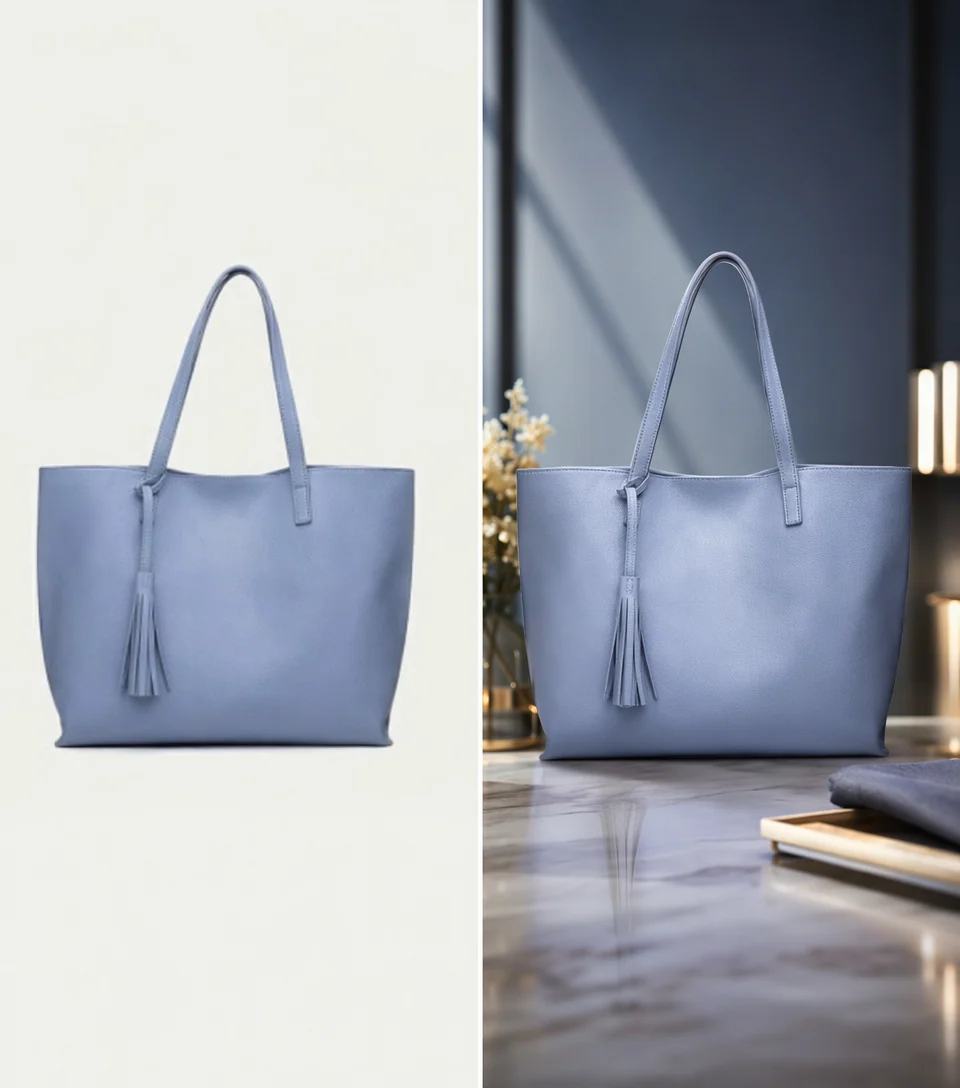
| Seasonal campaign scene | Generate from an approved source | Did the product stay unchanged in the new setting? |
| New channel crop | Recompose an existing approved asset | Is anything necessary hidden by the crop or platform controls? |
How do you calculate cost per approved product image?
The following is an illustrative planning calculation, not CREATR pricing or a customer result. Suppose a pilot uses $30 of allocated tool spend and 90 minutes of work valued at $20 per hour. Total pilot cost is $60. If 12 images pass review, the cost is $5 per approved image. If only six pass, the cost is $10. The generation price alone would hide that difference.
Keep cash spend and labor value in separate columns so a sole trader can see both. Existing equipment may create no new cash expense, but setup and review still take time. For subscriptions, calculate an allocation for the actual month rather than treating an annual discount or an unspent allowance as free production.
CREATR uses credits with costs that vary by tool and settings. Read the current pricing and credit allowances before planning a catalog run. Do not turn an allowance into a promise of approved images: retries, other tools and rejected results change the final count.
What should a small pilot include?
- Keep the approved source, SKU and variant name together. Confirm you have the right to edit and publish the image.
- Write one brief per placement, with the product details that must remain fixed.
- Record attempts, credits used, review minutes and the reason each rejected image failed.
- Preview accepted images on the actual product page or ad placement before counting them as approved.
A useful acceptance record names the problem precisely. “Bad image” tells you little. “Handle merged into background” or “label changed at thumbnail size” identifies the next action. If repeated attempts fail at the same detail, stop generating and improve the source or use a physical photo for that view.
Where can you reduce waste without lowering accuracy?
Group products by production difficulty rather than only by collection. Plain packaged goods may share a capture arrangement; glossy black electronics may need different light control. A consistent source setup reduces the number of unknowns when an output fails.
For a group of related products, define a common background tone, camera height and image role. Keep variant color and physical detail product-specific. A batch is only useful when its outputs can pass individual review. Avoid using the first acceptable result as evidence that every later SKU is accurate.
Keep one master file and create channel derivatives from it. The Shopify product-media documentation explains that image display depends on the theme. Preview the storefront instead of assuming an export size alone guarantees the right result.
When is AI the wrong budget choice?
Do not compare an AI lifestyle scene with a photographer’s complete production quote as though they delivered the same work. A quote may include models, usage rights, retouching, props, additional angles and coordination. Compare the same deliverables and approval standard.
A sensible first purchase is one that resolves an identified content gap. After the pilot, keep the workflow only if the approved output and the work required justify it. For the practical setup, read product photography without a studio. For a wider choice of methods, use the AI and traditional photography comparison.
Frequently asked questions
Can I start with a phone instead of buying a camera?
Yes, if the phone image clearly captures the details needed for the placement. Check focus, color, product edges and readable labels before generating. Buying a camera will not fix an unclear brief or a hidden product detail.
Does a credit allowance equal a finished catalog?
No. An allowance covers generation activity under the current plan and tool costs. Review, retries, rejected outputs and work in other tools determine how many assets are ultimately usable.
What should I record in my first budget test?
Record tool spend, capture and review time, attempts, approved outputs and rejection reasons. Calculate cost per approved asset and compare that with the same deliverable made through your current process.
Tools for this workflow
- AI Product Photography: Create studio and lifestyle images from an approved product photo.
- Product Photo Packs: Build a coordinated image set for a listing or product launch.
- AI Content Writer: Draft listing and campaign copy from real product details, then edit and fact-check it.